1. Agápe – undeserved love. In Latin, it is c(h)aritas. As English has the verb “cherish” from this Latin noun, the correct noun in English would be ‘cherishing.’ It is unselfish love as taught by Christ in the Sermon on the Mount and summed up by St. Paul the Apostle in 1 Corinthians 13.
2. Philía or the love between friends.
3. Storgé or familial love, especially between parents and their children and also with close relatives.
4. Éros, which has a pagan sexual sense, a Platonic philosophical sense and a religious sense. The basic meaning is attraction. It is also used for a person being ‘pulled’ towards God.
Sonnet 116 (The Marriage of True Minds) is a declaration, an idealistic manifesto. “Love,” as Shakespeare defines it, is not some shallow self-serving physical attraction, a James Bond style seduction that is really only about bolstering one’s own ego, but rather a “marriage of true minds.” It is reliable and constant (“an ever-fixed mark”) rather than an ephemeral fancy that fades with the beloved’s looks or youthfulness. Thus, it is clear that he is not talking of ‘romantic’ love or physical attraction at all – as the term “of true minds” implies, this is a wider and more lofty ‘love’ that is irrespective of gender or appearances. It encompasses friends (perhaps more so than lovers). It survives arguments and trying times (“looks on tempests and is never shaken”). Shakespeare is so certain of his belief that he states that if he is proved wrong, then he “never writ, nor no man ever lov’d.”
Macbeth (or The Scottish Play, as actors call it) is pure propaganda. Your teachers repeatedly tell you that “all stories are lies,” that everything we read (or every film or play we see) is an expression of the author’s views. Sometimes this is subtle, sometimes obvious – but human beings can never be impartial in their writing. The evidence suggests that this play was the result of one particular event in British history, a defining moment that is still commemorated yearly in the U.K. – The Gunpowder Plot.
When Protestant monarch King James VI of Scotland became James I of England too, the Catholics were hoping for a lessening in religious oppression. However, as their early hopes were dashed, many became disgruntled. A group of conspirators thus decided to take radical action – they would attempt to blow up the king by planting explosives beneath The Houses of Parliament (and killing numerous politicians along the way). The Gunpowder Plot failed – and James was determined that no one should try this crime again.
Despite being elected king (Elizabeth I died without an heir and appeared undecided whether he should succeed her), James was convinced that God had ordained him monarch. He believed in The Divine Right of Kings (no one could question him, since above him was only God) and so to kill a king was thus a crime against God.
In the aftermath of the Gunpowder plot, James immediately subverted an existing pre-Christian festival and re-named it Guy Fawkes Night (after one of the conspirators, whose face you may recognise from V For Vendetta and the Occupy the City anti-Capitalist excess protests). He then appears to have commissioned Shakespeare to produce Macbeth, a play that tells us in no uncertain terms that those who kill their monarchs are creatures of the devil and will go to Hell.
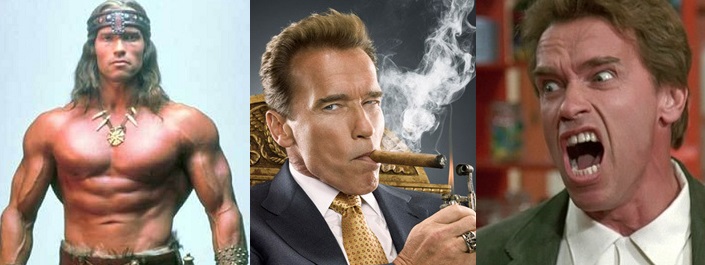
➠➠➠➠➠➠➠Hero➠➠➠➠➠➠➠➠➠King ➠➠➠➠➠➠➠➠Monster➠➠➠➠➠➠➠➠➠
The play is set in Scotland and contains some of James’ supposed ancestors (who, Shakespeare is eager to exonerate from any possible blame). It charts the moral decline of a man whose ambition leads him to listen to the voices of women (another of King James’ directions for the play, perhaps?) who, in terms of the drama, act as visual representations of the temptations within his own mind. At the start, Shakespeare repeatedly emphasises that this is a brave, fearless and heroic man, equating him with Mars (The God of War). He is like an American comic book hero – and when we first hear of him, he has just literally “carved” his way through the enemy ranks to disembowel their leader! (Think Captain America with a Scottish accent) However, when he murders the king to become king, this pivotal moment sets him on a course which will ultimately change him from hero to monster. This is why the play is a tragedy – a man with such incredible potential throws it all away by allowing himself to be seduced by evil desires.
In the course of the play, Shakespeare never misses an opportunity to flatter King James (“What, will the line stretch out to the crack of doom?” Act 4, sc1, ll.112–117) and to assert that those who (like one of the defendants in the Gunpowder Plot) “equivocate” (deceive without technically lying), cheat and (above all) murder, will certainly be doomed to “the everlasting bonfire.”
“His fiend-like Queen”
In this play, very little is what it seems (A sense of paranoia pervades all). Lady Macbeth appears to be a monster – but Shakespeare later subverts and re-frames this perspective…